Like Breath on Glass
Kokomo Dalle de Verre - Berry P-2.5
Kokomo Dalle de Verre - Berry P-2.5
Couldn't load pickup availability
Share
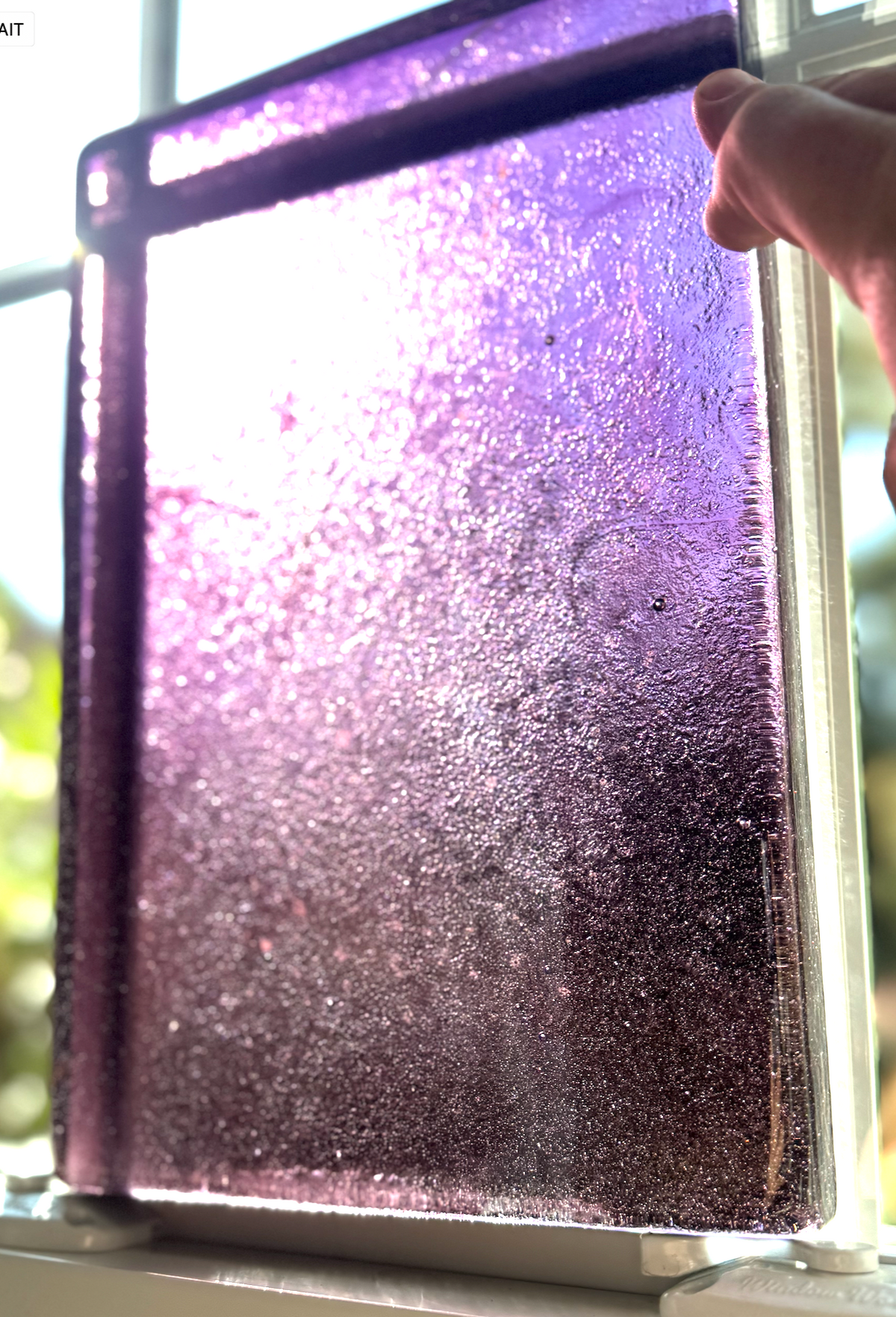
These pink Dalle de Verre glass slabs have a rich, romantic character, with colors ranging from soft blush and dusty rose to deeper raspberry, plum, and violet depending on the lighting and viewing angle.
Visual Character
The slabs appear to have several especially interesting qualities:
-
Deep rose-pink coloration: The transmitted light reveals a saturated pink center, while the edges can appear lighter and more lavender.
-
Pink-to-plum tonal variation: In the darker photograph, the glass takes on a sophisticated magenta, mauve, and violet character.
-
Excellent light transmission: Strong backlighting brings the color alive and produces glowing pink reflections on the surface beneath the glass.
-
Organic internal movement: Fine swirling, cloudy, and slightly rippled areas move through the slab, giving it considerable depth.
-
Tiny bubbles and inclusions: Numerous small bubbles are visible throughout the glass. Rather than appearing as flaws, they contribute to the handmade, molten character of the material.
-
Substantial body: The thickness gives the edges a darker, jewel-like appearance and allows light to travel through the glass before emerging at different intensities.
-
Rounded, softened edges: The slightly rounded perimeter catches light and creates bright borders around the darker interior.
-
Surface texture: Some areas have a subtly pebbled or satin-like appearance, which scatters light and prevents the color from looking completely flat.
The Color Changes Dramatically With Light
One of the most appealing characteristics of these slabs is their chameleon-like color.
In direct daylight they can appear clearer, blush-pink, and lavender, while strong transmitted light produces much more intense hot pink, magenta, and plum tones. In shadow or when viewed through the thickness, the glass becomes considerably darker and more dramatic.
That makes these particularly interesting for an artwork intended to change throughout the day.
How an Artist Could Use Them
1. Dalle de Verre wall panels
These would be beautiful in a figurative or abstract Dalle de Verre panel. An artist could break the slabs into large facets and combine them with:
-
clear glass
-
purple or lavender glass
-
amber
-
cobalt or turquoise
-
white/opalescent glass
The pink could become the dominant color while the contrasting pieces provide structure and visual tension.
2. Flowers and botanical imagery
The coloration is exceptionally well suited to roses, peonies, orchids, poppies, and other flowers. Large chunks could create petals, with darker magenta pieces establishing the folds and shadows within the flowers.
3. Abstract light sculpture
A particularly strong application would be a freestanding illuminated sculpture. Place the glass in front of a concealed light source and the internal bubbles and wisps would become part of the composition.
The result could look almost like glowing pink crystal or frozen light.
4. Sunset and atmospheric imagery
These slabs could represent the intense colors of a sunset—especially when combined with orange, amber, violet, and deep blue Dalle de Verre.
An artist could use progressively darker pieces toward the horizon to create a dramatic sense of depth.
5. Contemporary architectural installations
Large pink glass elements could be incorporated into:
-
illuminated room dividers
-
feature walls
-
windows
-
skylight installations
-
hotel or restaurant art
-
sculptural architectural panels
Backlighting would be particularly effective because the slab's thickness creates considerable color density.
6. Water and reflected light
Interestingly, the pink doesn't have to be used literally as "pink." Faceted pieces could represent reflected light on water, particularly in an abstract sunset scene. Combining pink with turquoise or cobalt could create an exceptionally vibrant palette.
Artistic Strength
What makes these slabs especially compelling is the combination of saturated color, translucency, internal texture, bubbles, and thickness. They have enough visual activity to stand on their own but are still sufficiently transparent to interact beautifully with surrounding colors and light.
For an artist, I would describe them as jewel-like architectural glass with a romantic rose-to-plum palette—particularly effective when the artwork relies on illumination, depth, and changing natural light.